NOW AVAILABLE Recording of Mini Round #4: Best of TTS Sydney 2026 Click Here
Early Career and President's Prize Awards @TTS2026
President's Prize Session - Cockle Bay 1 - Tuesday September 22 from 3:30-6:00pm followed by the TSANZ Networking Event - for presentation of the Early Career and President's Prize Awards - Proudly sponsored by ASTELLAS
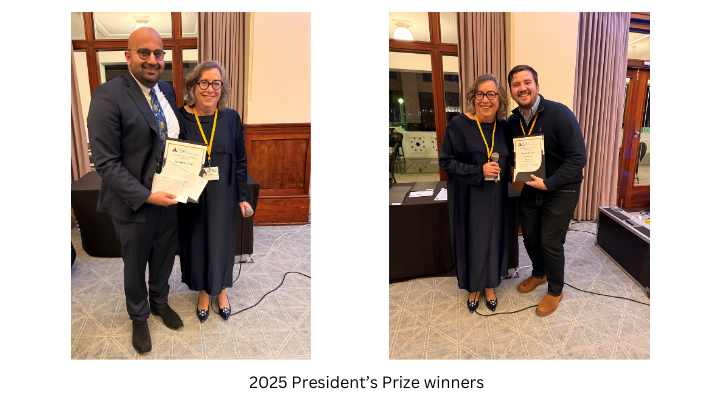
Note: the intent is for people early in their careers in clinical, science and research fields, and the criteria aims to be inclusive of a range of career paths and trajectories. More senior members undertaking later-career research degrees ARE NOT ELIGIBLE.
1. EARLY CAREER AWARDS
The top 10 highest scoring abstracts in both Clinical/Public Health/Health Services research & Basic Science research
Eligibility - MUST:
be a current financial member of the Society
not be receiving a Mentee/Mentor Award, bursary, or any other funding from the meeting organisers, and must have applied for a bursary if eligible
be within 3 (Clinical Researchers) or 5 (Basic Science Researchers) years of conferral of a specialist qualification/postgraduate research degree, or full-time equivalent where a career disruption exists* at the closing date of the awards
indicate TSANZ membership at the time of abstract submission and have an abstract accepted for oral presentation at TTS2026.
attend and present their abstract
Award
Return economy airfare (best lowest fare) from city of origin plus registration fee (or registration fee only for applicants from same state of meeting, unless from a regional area, where they may be able to receive some assistance with travel expenses)
2. PRESIDENT'S PRIZE: Clinical, Public Health and Health Services & Basic Science
The top 4 highest scoring Early Career Awardees in each category of Clinical/Public Health/Health Services & Basic Science research will be invited to give an oral presentation in the President’s Prize Symposium at the TTS2026 Conference on Tuesday September 22 from 3:30-6:00pm. The presentations will be judged, and two President's Prize awards will be given by TSANZ, one to the best Clinical/Public Health/Health Services research and one to the best Basic Science research. Awards will be presented at the TSANZ Networking Event that evening from 6:00–7:00 pm
Award
Up to the value of $5,000 to attend an overseas scientific meeting. The money is to offset the cost of travel, registration and accommodation and must be used within two years of winning the prize. An additional $500 prize for personal use is provided.
*Career Disruption: A career disruption involves a prolonged interruption (generally considered to be >=90 days FTE) to an applicant’s capacity to work, due to as examples pregnancy; major illness; carer responsibilities including parental leave and care for immediate family (e.g., spouse, children or elderly parent), or work within industry (with no capacity to be involved with medical research). Note that clinical work cannot be taken into consideration for career disruption if applying for the Clinical Researcher Award, and teaching roles (within a university or Clinical environment) cannot be taken into consideration for career disruption for any award. Any relevant career disruptions need to be clearly outlined in a separate word document submitted with your abstract and be approved by the supervisor(s). The intent of the TSANZ definition of career disruption is to align with definitions used by national health research entities e.g. NHMRC.